
Presence, Contact, and the Possibility of Change
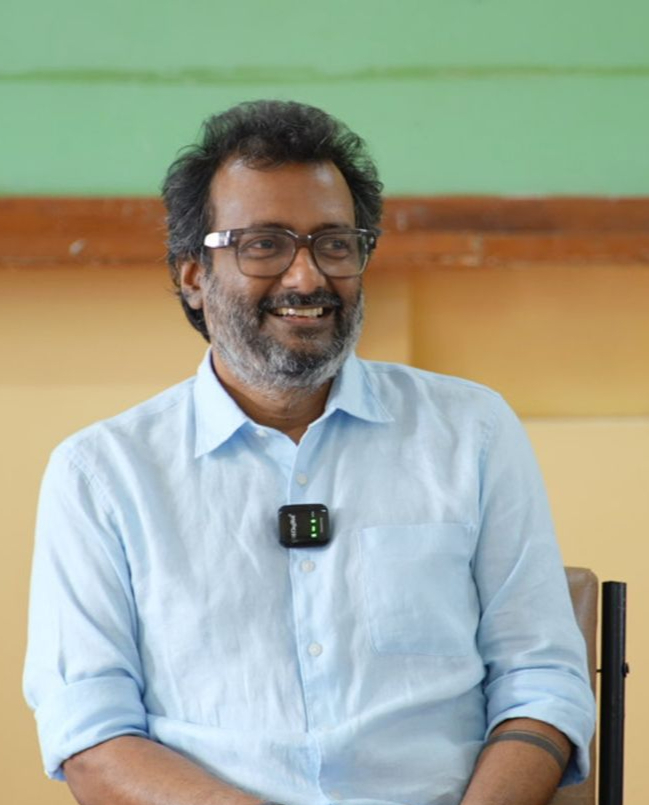
by Anil Thomas
The individual has within himself vast resources for self-understanding, for altering his self-concept, attitudes, and self-directed behaviourThe therapist is not the one who installs healing into the client. The therapist creates the relational conditions in which the client’s own organismic intelligence, awareness, and capacity begin to reorganise themselves.
The client is the expert on their own life. - Carl Rogers
If you are going into the context (of intervention) with the idea that they are going to love you or hate you, then you are already defeated from the beginning as far as any change or choice is concerned for you or for them. The minute one start worrying about whether somebody approves of me, or whether I am doing it right in their eyes, then they stop seeing the person in front, immediacy is contaminate, and far goes curiosity and wonderment. That is when the quality of presence is contaminated, when access to the here-and-now is lost. What I realized over the years is that ‘your presence itself is the biggest medium that is going to make a difference’.
“If your presence cannot heal, don't even try words”
- Judith (Judy) DeLozier
No matter how wonderful or magnificent or terrible you think you are, the minute another human being comes into the shared spaces (of you and them), something changes. That is simply physics! You move one body into a place where other bodies already exist, and there has to be movement, there has to be change.
So I stopped thinking that my work was about making people like me or convincing them of something
- Richard (Dick) McHugh
My work is to support my clients to open up their ability to cope, to see, to feel, and to make new choices. And that does not happen because we pat somebody on the head and tell them they are good, and it does not happen because we blame them either. It happens because something new becomes possible in the way they experience themselves.
- Virginia Satir
It is the client who knows what hurts, what directions to go, what problems are crucial, what experiences have been deeply buried - Carl Rogers
And when parents understand this concept with respect to their children, and therapists in relation with their clients, then something very important changes. We begin to recognize that whatever another person says to us comes out of them and has very little to do with us. People speak from their own pain, their own fear, their own personal history (the museum of their archives), their own rules, loyalties, hierarchies and permissions about life. If the interventionists do not understand this simple funda, then they begin to react personally to everything. That could be the birth of transference (or counter transference) or from a gestalt point of view, it could be birth of the neurotic (when i say neurotic, i mean from the behavioural stand point and not diagnostic) But when the interventionist understands it, then they can stay connected to self, the field and the other, without needing to defend themself or rescue another. What I have learned from Dick is that new connections need to be made somehow, and reality needs to come forward differently so that new choices become available to us as human beings in dealing with life and its many contexts. As long as we remain bound to old narratives, unresolved hurt, and lingering emotional positions, we continue to operate from an old timeline, accessing behaviours that may once have helped us survive, but in the present moment have become anachronistic. Much of therapeutic work, then, is helping people re-experience themselves in ways that allow fresh meanings, new permissions, and different decisions to emerge.
You cannot build a new life (contexts of health, ambition, relations etc),
while you continue to live in old survival patterns of
longing, missing, hurting, hating, wanting revenge,
asking why or why me, why not, et cetera, et cetera
The day you stop needing this material to validate your existence;
That is when the real transformation begins and newer choices open up.
So as interventions, our job is to hold that shared space with genuineness, congruity, wonderment, and immediacy. To be there fully as we could while the client sets out on that journey of exploration and creates newer maps of the world for themselves. “I do not believe anymore that it is necessary to spend endless amounts of time with people”, Satir said and she continued, “I used to think that once. I do not anymore. Because I realized my job is not to take over their choices or become the authority on their life. My job is to become a kind of medium through which they begin to find their own light, their own insight, their own “ah-ha,” their own realization”. People need contact that carries a new experience in it. They need to experience themselves differently from how they have always experienced themselves. That is what we could attempt to accomplish. And with a presence of that nature, the client could attempt to free the healing parts of the self that have become trapped in old positions.
Whenever people have terrible experiences, especially during formative years as children, those experiences begin to organize perception. They become the way the world is understood. They become normal. Before I learned these concepts from neurolinguistics, Gestalt, and their application in intervention work, I used to believe very strongly in the idea of the traumatic incident, as though one event sat there like a fixed object determining the rest of a person’s life. I do not think about it that way anymore. I think there are patterns of living, patterns of coping, patterns of feeling and responding, and when certain conditions cluster together, all the old memories and all the old ways of being suddenly gather into that one moment and begin to organise perception, behaviour, and emotional response in the present. Then the emotional eruption comes, where the person is no longer reacting only to the present situation, but from many years of accumulated experience surfacing at once. In such moments, the response carries far more than the immediate context. There are often parts of the person that still do not have the information, safety, or integration they once needed, particularly within the right hemisphere where feeling, imagery, sensory impressions, and body memory are deeply held. Every adult experiences anger, fear, or overwhelm at times. But if, at some earlier point in life, anger was met with shame, punishment, or threat, then anger no longer remains a simple emotion. It becomes linked to fear, sound, image, memory, bodily sensation, and protective action. A whole “take” becomes organised around that experience, and over time, that “take” begins to shape perception, behaviour, and relationship until it is revisited, undone, or reworked.
There is nothing that we put into people. We are not filling them up with strength or giving them something they do not already possess. What we are doing, whether as parents, teachers, coaches, counsellors, therapists, or healers, is supporting people to open up whatever it is they need to open up within themselves. Every good physician, healer, or helping professional understands this at some level. In social contexts it is called rapport. In therapy it is called a relationship. Without that relational safety, there is very little space where meaningful change could happen, because there is no place secure enough for a person to experience themselves differently. The work, then, is not to control people, rescue them, or direct their lives, but to create the conditions in which they are able to turn their own lights back on.
------
This article is inspired by the concept discussion and interaction that I had with my IDP batch in May of 2026

