Beyond Programming 101
International Center for Training and Research in Neurolinguistics and Gestalt Psychology


Integrated Diploma Programme 2027
Counselling Skills for Advanced Intervention and Client Facilitation
Counselling is the disciplined practice of bringing safety to another person's inner world with empathy, curiosity, respect and clinical sensitivity. The 10-month Counselling Diploma offers an immersive study of the humanistic principles that inform ethical and relational practice. The curriculum develops competence in therapeutic listening, psychological safety, cultural responsiveness, reflective inquiry through professional presence. Participants cultivate the ability to establish trusting therapeutic relationships that encourage exploration, strengthen personal agency, and honour individual lived experience. Graduates leave with a deeper understanding of human connection and the confidence to support meaningful psychological development across diverse counselling settings.
The curriculum brings together influential traditions in humanistic counselling, experiential psychotherapy, communication, systemic thinking, coaching psychology, and contemporary integrative practice. Learning is informed by the contributions of Carl Rogers, Milton Erickson, Virginia Satir, Gregory Bateson, Fritz Perls, Carl Jung, and other pioneering thinkers whose work continues to shape modern therapeutic practice.
Learning takes place through lectures, discussions, supervised practice and continuous assessment across five progressive modules over ten months. Faculty-led teaching is complemented by specialist sessions delivered by experienced counselling professionals. Weekly skills practice, structured feedback, bridge seminars, supervision vivas, written assessments, live case demonstrations and reflective learning support the development of professional competence. Client work, personal development, internship and directed reading form essential components of the programme, creating a rigorous learning environment that reflects the standards of contemporary counselling education.
Eligibility: Post-Graduate in any discipline from a recognized University &/or 200 hours of certified continuous education.
No previous training or experience in Counselling/Counselling Skill required.
Medium of Instruction: English
Age: 25 & above
Batch Intake: 45 participants
Progression: Successful candidates after clearing all the requisites may be invited for advance research, training opportunity, content research & counselling references.
Syllabus
The course syllabus comprises five modules which are scheduled over 10 months, necessitating mandatory completion within their respective module periods. It is Mandatory to study & clear all 5 modules.
The pre-work access for the course will be shared by August 2026. The pre-work will include recorded video comprehension & reading material.
Pre-work
-
Basics of counselling and intervention
-
Role disparity and identity contamination
-
Clarifying roles, goals, direction, and speed
-
Discovering character, personality, and behaviour
-
Intervention modes, empathy, and sponsorship tools
-
Micro-skills, perception theory, and silence structure
-
Sensory acuity and information processing models
01. Module I
-
Empathy & sponsorship
-
Structure & process of intervention
-
Micro-skills lab
-
Perception theory & GDD
-
Calibrating sensory acuity
02. Module II
-
Archetypal behaviours, roles and role disparity
-
Relation hierarchy & representation in the matrix
-
Grounding techniques & COACH state
-
Polarities & unfinished businesses
-
Identity, self-concept, self-esteem, peer relation
03. Module III
-
Neurological alignment
-
SC-R-OE model
-
Representational system & inner neurology
-
Meta programs & underlining hierarchies
-
Psychological wellbeing and behavioural impediments
Micro-Learning Sessions
-
Perceptual position
-
Silence and listening
-
Meta model
-
Meta program
04. Module IV
-
Timeline correction & historic representation
-
Early models & eliciting impacts
-
Relation, emotion, expression & verbalisation
-
Redecission and reframing : Autonomy, agency & choice point
-
Concepts of personality & personality development
05. Module V
-
Advanced process of counselling
-
Understanding Mental Status Examination (MSE)
-
Resistance of commerce (blocks & closure)
-
Identifying difficulty in regulation of emotions
-
Understanding developmental impacts
Counselling Foundation Sessions
-
Types of counselling
-
Ethics and diversity
-
Therapeutic boundaries and duality
-
Contracting
-
Emotions, moods and feelings
-
Encouragers
-
Role of counselling in primary prevention
Course Structure
Although this programme is primarily designed for working and practising professionals who can learn alongside their existing commitments, it is academically rigorous. Spread across 257 hours of theory, practice, supervision, case studies and experiential learning, the programme is designed to provide participants with the depth of understanding and hands-on experience required to independently facilitate an end-to-end session across a range of cases.
257 Hours of intensive training, practice & Supervision
(A)
(B)
(C)
(D)
(E)
(F)
Pre-work, Video Lectures & Reading Material
(47 Hours)
Live Classroom Sessions with Anil Thomas
(112 Hours)
Group Practice Sessions
(40 hours)
Supervision Lab & Assessments (18 Hours)
Additional Counselling Foundation sessions
(20 hours)
Additional micro-learning session
(20 hours)
Important Dates for 2027 batch
1st June 2026 : Enrollments open for 2027 diploma batch
2nd September 2026 : Pre-work access available for the participants
9th January 2027 : Live sessions start
Below is the detailed schedule for 2027 batch

Fee Structure & Enrollment
We offer a tiered fee structure for the Integrated Diploma Programme to support early registrations
Course Fee (All Inclusive)
-
First 20 Registrations: ₹99,000
-
Next 20 Registrations: ₹1,10,000
-
Afterwards: ₹1,20,000
Note: All fees are inclusive of taxes and cover access to live sessions, pre-work material, supervision labs, assessments, and peer practice sessions.
Registration & Payment Details
A minimum payment of ₹9,000 is required to confirm your registration.
The remaining balance can be paid through one of the following installment plans:
Flexible Payment Options Available
Certification & requisites


To be eligible for certification, participants are required to fulfill the following criteria by December 2027:
-
Maintain a minimum of 75% attendance in classroom sessions
-
Attend at least 10 practice sessions
-
Successfully complete assessments for all 5 modules
-
Complete 10 self-work sessions with mandatory documentation
-
Undertake a 60-hour internship with a psychologist, organisation, NGO, etc., and submit a letter of completion or recommendation
-
Submit 1 recorded intervention session (to be submitted post-October)
-
Submit an article (concept or case study)
-
Clear the final assessment.
Participants who successfully meet all the above requirements will be awarded their certification during the Commemoration Ceremony
Course Overview
This is an inclusive approach of bringing to the field the work by Richard (Dick) McHugh, Judith DeLozier, Robert Dilts & John Grinder. It is a conceptual, experiential & research based approach from contemporary psychology which has travelled over time from some classic approaches of Gestalt Therapy, the Interplay of Constellation Roles, Concepts of Transactional Analysis, & Deep Alchemy of Jung through metaphors & archetypes.
Course Objectives:
-
Learn systemic, structured & formula-based therapeutic skills of Neurolinguistics & Gestalt Therapy.
-
Learn tools to evaluate blocks in the clients preventing linguistic narratives.
-
Inventory through the concept to challenge the current model, discover resources & support growth & change.
-
Learn frequency of physical, emotional, psychological function & somatic experiencing (body, breath, movement & stuckness).
-
Explore the thin line between pathology & norm.
-
Learn tools to research & publish a paper.
This is an ideal course for those who seek to augment their own state, resource & collective intelligence so as to acquire Advnaced Counselling skills – to listen, respond through language to their unconscious communications that is available in 5D Matrix.
Learner’s Outcomes:
-
Elicit the flashes & cue at the earliest.
-
Integrate the therapeutic model of Neurolinguistics, which was modelled from clinicians such as Fritz Perls, Milton Erickson, etc.
-
Use the tools & wisdom to approach complex issues from multiple perspectives.
-
Develop a network of support & buddy for self & clients.
-
Regularly update of tools, continuous peer review sessions & access to personal therapies.
-
Select your niche & develop your area of research, & publish a research paper.
-
Get additionally certified in Trauma Responses, Behaviours & Addictions.
Meet our faculty

Anil Thomas
Master Facilitator, NLP Trainer & Gestalt Practitioner
Anil is a trainer in Neuro-Linguistic Programming, a Gestalt practitioner, and a mentor with the International Journal of Neurolinguistic and Gestalt Psychology (IJNGP). His teaching and writing arise from a lineage that bridges scientific inquiry with contemplative understanding.
His foundational training was under Dr Richard (Dick) McHugh SJ, whose integration of awareness, language, and silence continues to inform Anil’s orientation to both psychotherapy and mindfulness. After McHugh’s passing, he deepened his study with a few of Dick's mentors like Judith (Judy) DeLozier, Robert Dilts, John Grinder, etc., refining his grasp of modelling, relational process, and the ethical dimension of transformation. His orientation is also shaped by Fritz Perls’ Gestalt philosophy and its dialogue with Zen, by the contemplative work of McHugh and Father Tony de Mello, and by Jung’s study of archetype and psyche within the Mahāyāna understanding of the conditioned mind. These influences converge in Anil’s continuing work on grief, loss, and renewal, where mindfulness, empathy, and presence serve as ways of knowing, an inheritance from teachers who believed that to engage the psyche is to serve awareness itself.

Samindara Sawant
Psychologist & Psychotherapist, Trauma Focused Therapist, Regression Therapist
Samindara specializes in psycho-diagnostics and clinical assessments and has considerable experience in child, adolescent, marriage as well as family psychotherapy. She works with equal ease with relationship challenges among various populations. Samindara has extensive experience in conducting workshops and training and has worked with various populations like students, parents, employees, teachers and so forth. She is also experienced in competency mapping, assessment and development centres, performance management, competency development, psychometric test development and so forth.
She has been an honorary expert columnist on marital counselling for the portal www.rediff.com and has several articles on this portal. She is the author of 'Taming the Tornado: A Parent Manual to Manage the ADHD Child', which was published in April 2011. Her second book, ‘Keep Going’, co-authored with Anil Thomas, has been published in September 2020.
Guest Faculty

Aarti Asrani
NLP Trainer & Gestalt Practitioner
Aarti is a therapist, coach, and facilitator whose work bridges Buddhist philosophy, Gestalt inquiry, and the science of Neuro-Linguistic Programming. Her teaching and practice arise from an integration of spiritual insight and psychological depth, grounded in 28 years of Buddhist practice and shaped by 24 international certifications in mind–body healing and energy modalities.
Her formative influence comes from Dr. Daisaku Ikeda and the writings of Nichiren Daishonin, which continue to inform her understanding that awareness itself is both the path and the destination. This foundation is complemented by the transformative philosophies of Louise Hay, Dr. Wayne Dyer, Virginia Satir, Fritz Perls, and Eckhart Tolle…..each illuminating a unique dimension of consciousness, presence, and healing. The living teachings of Abraham and Esther Hicks further deepen her inquiry into vibration, thought, and the art of deliberate creation.
Supervision Panel

Anagha Pandit
Clinical Psychologist, IDP Graduate 2025 batch

Nishul Gupta
Counselling Psychologist, Career Counsellor, Expressive Arts & Gestalt Therapist

Ritika Jain
Counselling Psychologist
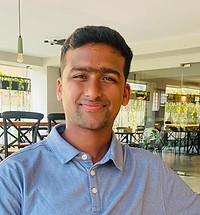
Shreyash Chhajed
Clinical Psychologist
Previous Batches

2023 Batch

2024 Batch

2025 Batch

2023 Batch Commemoration

2024 Batch Commemoration

2025 Batch Commemoration
Frequently Asked Questions
1. What is the duration of the programme and is it accessible from different locations?
The course is spread across 10 months and is divided into two semesters. The programme is currently offered in an online format, allowing participants to attend from their respective locations.
2. What does the weekly class schedule look like?
The programme includes approximately 8 hours of live sessions with Anil Thomas conducted over one weekend every week.
In addition:
-
Two supervised practice sessions are conducted on Thursdays from 8:00 pm to 10:00 pm.
-
Two Thursdays every month are reserved for additional faculty lectures, assessments, mentoring sessions, case discussions, and group reflections.
3. What is the assessment and evaluation process in the programme?
Assessment in the programme is experiential and integrative in nature. Evaluation methods include:
-
Written integrations
-
Supervision process evaluations
-
Assignments
-
Participation in practicum and reflective processes
Students are expected to complete and submit all required assessments within the given timelines.
4. What kind of learning approach does the programme follow?
The programme is designed to provide participants with experiential and practice-oriented learning.
The pedagogy includes:
-
Live demonstrations
-
Role plays
-
Case discussions
-
Group process work
-
Supervised practice sessions
-
Lectures & interactive reflections
The structure of the programme aims to support the transfer of learning into therapeutic, counselling, and interpersonal settings.
5. Does completion of the programme qualify me to practice independently as a therapist or counsellor?
This programme is a value-added professional training course. Completion of the programme alone does not qualify an individual to independently practice as a licensed psychologist, therapist, or counsellor.
To practice independently in these roles, a recognised postgraduate or Master’s degree in the relevant field may be required, depending on the professional and legal requirements applicable in your region. However, the programme can support participants in strengthening their counselling and therapeutic skills and may be beneficial for those working in mental health, education, coaching, HR, community work, and allied helping professions
5. Can this programme support my pathway toward higher studies in Psychology?
Yes, you may apply for a Master’s programme in Psychology after completion of the course, subject to the eligibility criteria of the respective university or institution.
6. Is there any internship or practical fieldwork included in the programme?
Students are required to complete a 60-hour internship or field practicum as part of the programme.
7. Is a background in Psychology mandatory to apply for the programme?
There is no mandatory undergraduate major required to apply for the programme. However, prior exposure to psychology, counselling, human development, social sciences, or related fields may be beneficial.
8. Will there be opportunities to interact with professionals and practitioners from the field?
Yes. The programme regularly invites guest faculty, practitioners, alumni, and professionals from related disciplines for lectures, discussions, and interactive sessions, creating opportunities for networking and professional exposure.
9. Who can I reach out to if I face difficulties or concerns during the programme?
Any academic, administrative, or personal concerns related to the programme may be discussed with the Programme Coordinator or relevant faculty members. Participants will be guided and supported based on the nature of the concern.

Office no.2, Legends Appt., Vakola, Santacruz East, Mumbai 400 055.
atf@anilthomas.co | 8097889619
Copyright © 2013-2023 Anil Thomas. All Rights Reserved